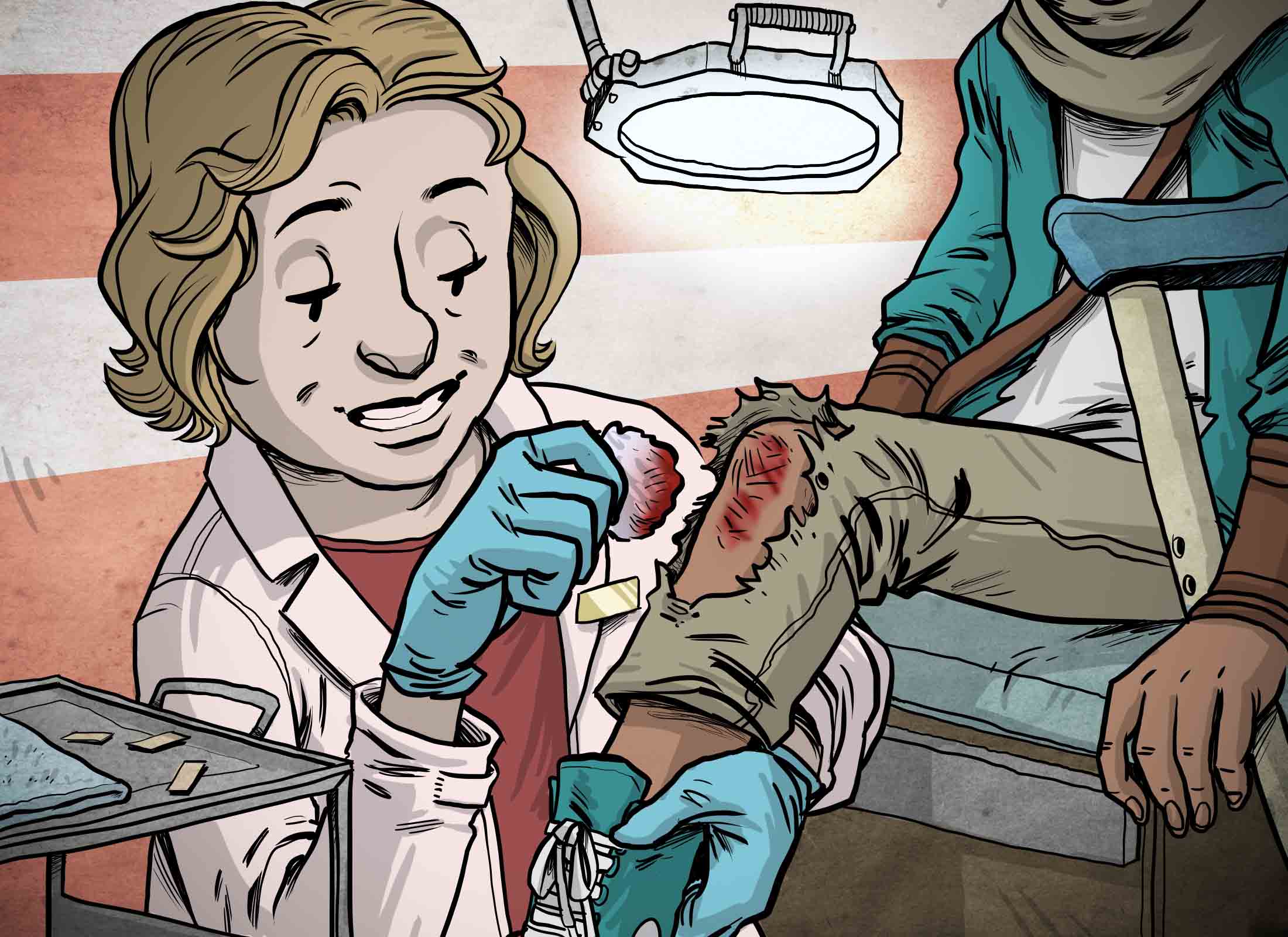
The doctor begins your examination immediately in a no-nonsense manner. As she begins flexing your leg, she joins in the conversation. “I agree that men and women differ in profound ways, and for the most part, the voices of women have been silent. ‘One might say that ethics has been discussed largely in the language of the father: in principles and propositions, in terms of justification, fairness and justice. The mother’s voice has been silent. Human caring and memory of caring and being cared for, which I shall argue form the foundation of ethical response, have not received attention except as outcomes of ethical behavior.’[2] Think about your own childhood. Generally, among the most fundamental of relationships is that between a mother (or parent) and a child. Care ethics teaches that moral value resides within this mother-child relationship. Many other theories overlook this important fact with their emphasis on rights and duties. Rather than autonomy, justice, or rationality, feminine-based ethics focus more on interdependence, empathy, and personal understanding.” Dr. Noddings carefully prods your knee where a bruise is already beginning to appear. “, does this hurt?” she asks.
“Just a little,” you reply and Dr. Noddings smiles but continues her work.
“I believe that ethics is not simply abstract principles of justice and rights. Ethical people care for one another, not just in theory but in actual relationships. A child learns how to be caring from his or her mother who sets the example. As we learn to be ethical, caring people, we develop our sense of what is the right or wrong way to respond in an ethical situation. Ethical behavior is caring for another person and freely choosing to act on this feeling. The behavior is not driven by duty, but rather is motivated by a desire to live up to the ideal of a caring person. The person who is doing the caring and the person who is cared-for are both involved in a moral relationship to care for each other and treat each other well.”
Dr. Noddings finishes up her exam and states, “I have good news. Nothing is broken but you do have a sprained ligament. Stay on the crutches for a day or so and take these pain pills. I think you’ll start to feel better within a short time. Why don’t you rest with some of our other patients in the recovery room until you feel up to continuing your journey?”
Nurse Baier helps you to your feet and leads you to the recovery room.
[2] Nel Nodding, Caring: A Feminine Approach to Ethics and Moral Education, 1984: 1
